
HMS Safety Valve
Home
Products > HMS Safety Valve
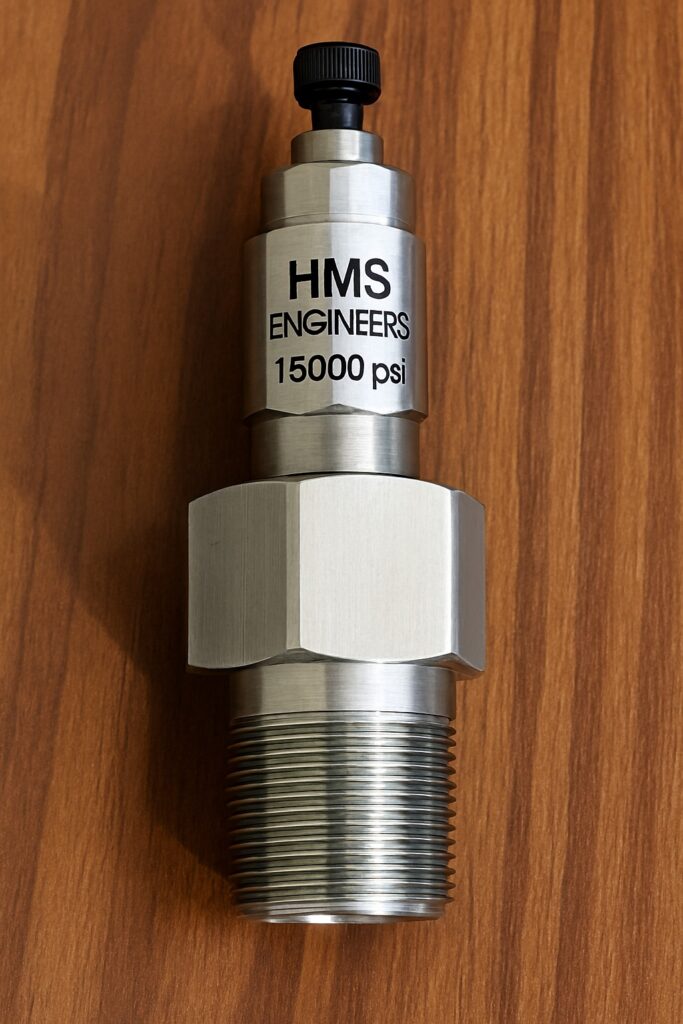
HMS Safety Valve
Overview
The HMS Safety Valve is a critical protective device integrated into oil & gas testing systems, designed to automatically relieve excess pressure and safeguard equipment, personnel, and processes. It ensures that test wells, booster systems, and hydraulic circuits operate within safe limits.
⚙️ Construction & Design
- Material: High-strength stainless steel (SS 316/SS 304) for corrosion resistance and durability.
- Type: Spring-loaded or pilot-operated, depending on application.
- Pressure Range: Configurable from 500 psi up to 20,000+ psi for high-pressure testing environments.
- Sealing: Precision-machined seat and disc for leak-tight performance.
- Connections: Standard threaded (NPT/BSP) or flanged connections for easy integration.
🔑 Key Features
- Automatic Pressure Relief: Opens when system pressure exceeds the set limit, preventing catastrophic failure.
- Adjustable Set Pressure: Calibrated to specific test requirements.
- Quick Reset: Valve reseats automatically once pressure normalizes.
- Fail-Safe Design: Operates without external power, ensuring reliability in emergencies.
- Compatibility: Works seamlessly with HMS Vertical and Horizontal Test Wells, booster pumps, and SS tubing networks.
🧪 Applications
- Test Wells: Protects vertical and horizontal test setups from overpressure during product validation.
- Booster Systems: Ensures safe operation of hydraulic and gas boosters.
- Pipeline & Process Safety: Prevents damage in oil & gas pipelines, compressors, and vessels.
- Control Rooms: Integrated with pressure transmitters for monitoring and logging relief events.
📊 Benefits
- Safety Assurance: Prevents accidents and equipment damage.
- Operational Reliability: Maintains system integrity under varying test conditions.
- Cost Efficiency: Reduces downtime and repair costs by mitigating overpressure risks.
- Compliance: Meets international standards (ASME, API, ISO) for pressure relief devices.
✅ In HMS systems, the Safety Valve acts as the last line of defense, complementing gauges and transmitters to create a layered safety architecture.