
HMS SCADA Software Development
Home
Products > HMS SCADA Software Development
💻 HMS SCADA Software Development
Overview
The HMS SCADA (Supervisory Control and Data Acquisition) Software is a custom-developed platform that provides real-time monitoring, control, and automation of HMS test wells, booster systems, manifolds, valves, and electrical panels. It integrates field instrumentation with centralized control, ensuring safe, efficient, and data-driven operations in oil & gas testing environments.
⚙️ Architecture & Design
- Field Layer:
- Sensors (pressure transmitters, load cells, temperature probes).
- Actuators (needle valves, boosters, pumps, safety valves).
- Communication via Modbus, Profibus, or Ethernet/IP.
- Control Layer:
- PLC (Programmable Logic Controller) executes logic for safety interlocks and automation.
- Electrical Panels house PLCs, relays, and power supplies.
- Supervisory Layer:
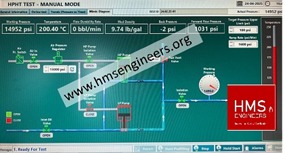
- SCADA software provides graphical dashboards for operators.
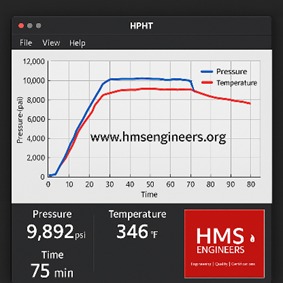
- Real-time trends, alarms, and event logging.
- Secure data storage for analysis and reporting.
- Enterprise Layer:
- Integration with ERP, cloud platforms, and databases.
- Remote access via secure VPN or web-based clients.
🔑 Key Features
- Real-Time Monitoring: Displays live pressure, temperature, and flow data from HMS test wells.
- Automation: Controls boosters, valves, and manifolds with PLC-driven sequences.
- Alarm Management: Triggers alerts for overpressure, leaks, or equipment faults.
- Data Logging: Records test parameters for compliance and client reporting.
- User Interface: Intuitive dashboards with trend charts, mimic diagrams, and control buttons.
- Remote Access: Enables monitoring and control from control rooms or mobile devices.
- Cybersecurity: Role-based access, encrypted communication, and audit trails.
🧪 Applications
- Vertical & Horizontal Test Wells: Automated control of pressure cycles, fluid injection, and monitoring.
- Booster Systems: Supervises hydraulic and gas boosters, ensuring safe pressure amplification.
- Manifolds & Valves: Centralized control of distribution and isolation functions.
- Electrical Panels: Integration with PLCs for power and safety management.
- Client Reporting: Generates automated test reports with logged data.
📊 Benefits
- Safety Assurance: Automated interlocks prevent overpressure and equipment damage.
- Efficiency: Reduces manual intervention and speeds up testing cycles.
- Reliability: Continuous monitoring ensures consistent performance.
- Scalability: Modular design supports expansion for new test rigs or product lines.
- Data-Driven Insights: Enables predictive maintenance and performance optimization.
✅ In HMS systems, the SCADA software acts as the digital nervous system, connecting mechanical, hydraulic, and electrical subsystems into a cohesive, intelligent testing environment.